
Industries
ERP for ceramics companies: what it is and which functions it needs
An ERP for ceramics companies is business software that integrates sales, purchasing, production, warehouse and accounting in a single database, with tile-specific functions: shade and calibre control, batch and pallet management, real cost per batch, EDI with distributors and an RF warehouse.
- Author
- UserIT
- Published
- Updated
- Reading time
- 5 min

Two boxes of the same tile model can contain pieces of a different shade or calibre, and the factory’s ERP has to know it. That detail, and a few more, determine the functions that the business software of a ceramics company needs, whether it is a tile manufacturer, a spray-drying plant or a glaze supplier.
What makes managing a ceramics company different
In a tile factory, the same model comes out of the kiln with colour and size variations between firings, is sold in boxes, square metres and pallets at once, and a good part of production goes to large distributors that require EDI. An ERP designed for other industries forces you to handle all that with spreadsheets.
Batches, units of measure and traceability affect sales, warehouse, production and invoicing. That is why an ERP for ceramics has to handle them in the core of the system and carry them through every document, from the order to the invoice.
Shades, calibres and batches: the centre of the system
Shade and calibre identify each production run, and two different batches should not be mixed on the same job. The ERP has to treat them as part of the batch: reserve by shade and calibre when taking the order, ship exactly what was reserved and record it on the delivery note and the invoice.
The shade is the colour variation between firings of the same model. The calibre is the variation of the real size of the piece from its nominal size. And the batch is the run manufactured under the same conditions, which groups a specific shade and calibre.
When the customer orders again to finish a job, the system has to know which batch was shipped and whether there is stock left of that same shade and calibre.
Pieces, boxes, metres and pallets at once
Ceramics is manufactured in pieces, packed in boxes, sold in square metres and shipped on pallets. The ERP has to convert between those units for each piece format, so that stock balances in all of them at once and the customer receives on site exactly the surface area ordered.
Conversion errors show up in two places: in the warehouse, when the stock count does not balance, and on site, when metres are missing or boxes are left over.
Production with real cost per batch
Ceramic manufacturing consumes glazes, spray-dried powder and energy in quantities that vary from one batch to another. A ceramics ERP records production orders, consumption and times per phase, and with those data calculates the real cost of each batch, which can be quite far from the one given by the theoretical cost sheet.
With that cost, management can see which formats leave the most margin and which items need a price review.
Location-based warehouse with radio frequency
In a large warehouse, with thousands of items in several shades and calibres, you cannot work from memory. With radio-frequency terminals, every receipt, location, picking and loading is recorded at the moment: the system stock matches the physical stock and orders go out without mixing batches.
That is done by a warehouse management system connected to the ERP. The operator scans the pallet label and the system checks on the spot that the batch is the one reserved for that order.
EDI, B2B portal and invoicing
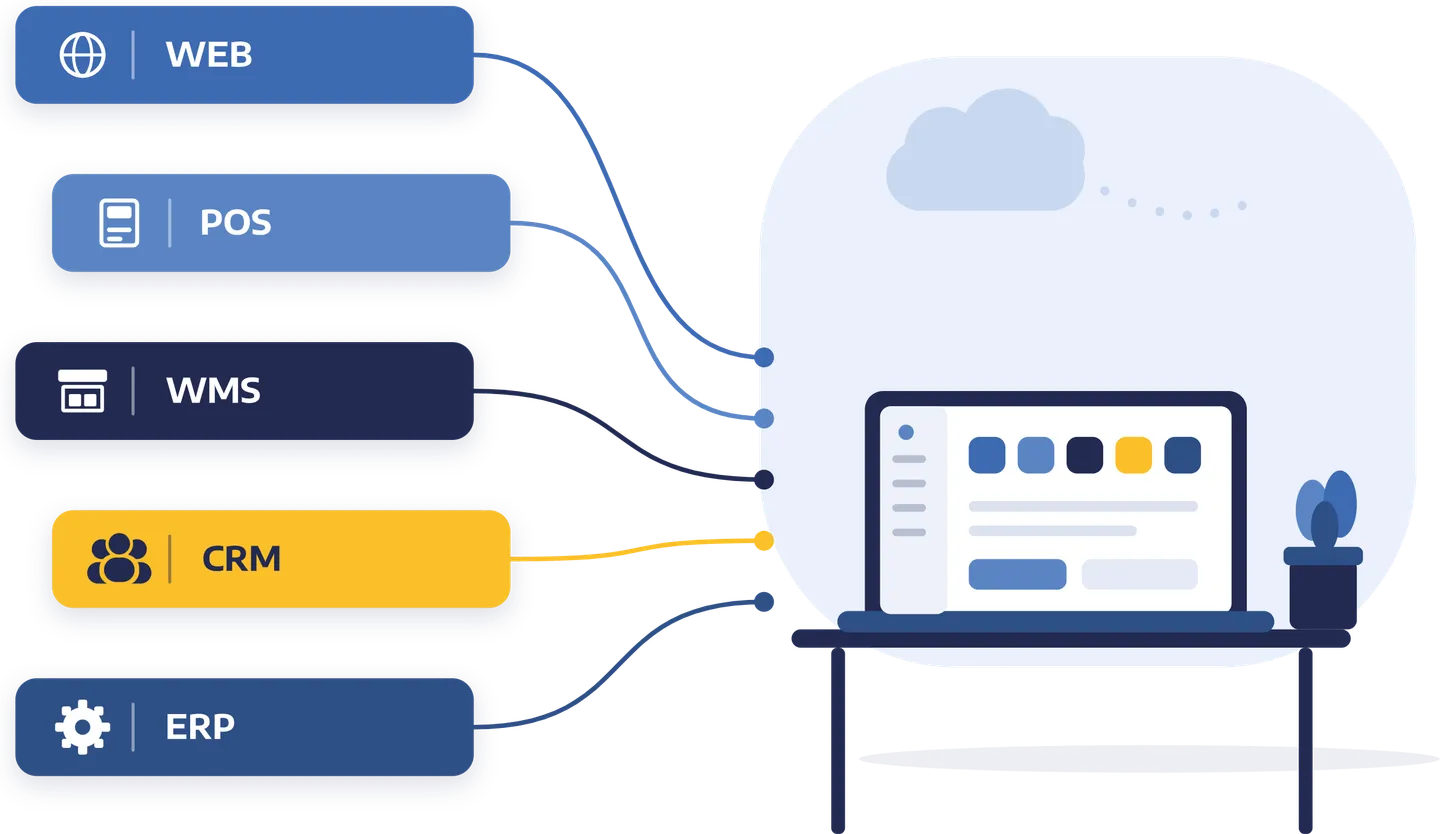
Large building-materials distributors require orders, delivery notes and invoices to be exchanged by EDI, and many trade customers want to check prices, stock and the status of their orders without phoning. A ceramics ERP connects both channels to management, together with e-invoicing and the SII.
E-invoicing will carry more weight when mandatory e-invoicing between companies arrives. The structured exchange of invoices, done today mainly with the large chains, will extend to all customers.
What to ask before choosing an ERP for your ceramics company
Ask them to show you, with your own items, how an order is reserved by shade and calibre, how metres are converted into boxes and pallets, how the cost of a batch is calculated and how an EDI order goes out. If the answer to any of these is a separate spreadsheet, note it as a gap in the program.
For the rest of the decision (total cost, support, cloud or your own servers), see our guide on how to choose an ERP.
W3ERP in the ceramics industry
The best companies in the Valencian ceramics cluster work with USER Informática: tile and porcelain tile manufacturers, spray-drying plants and glaze suppliers. W3ERP, which runs in the browser, includes batch and packaging management, production with cost per batch, EDI, e-invoicing, SII, a warehouse with radio frequency and a B2B portal.
The W3ERP for ceramics and materials page lists the clients and the modules used most.